
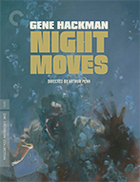
Night Moves (4K UHD)
| 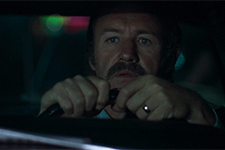 In response to Vietnam, Watergate, the Mideast oil crisis, soaring divorce rates, and other elements of what Jimmy Carter wound infamously label “a crisis of confidence” in his 1979 “Malaise Speech” Hollywood in the 1970s produced a lot of despondent films. However, I would be hard-pressed to name one that is more despondent than Arthur Penn’s Night Moves. There are plenty of contenders, to be sure, films that uncovered hearts of darkness we didn’t want to name and left their protagonists stranded, defeated, or worse: Alan J. Pakula’s The Parallax View (1974), Roman Polanski’s Chinatown (1974), Francis Ford Coppola’s The Conversation (1974)—which, like Night Moves, stars Gene Hackman as an emotionally fragile detective. Yet, none of those films, for all their darkness, feel quite as lost, quite as hopeless, quite as devastating as Night Moves, perhaps because the stakes for Harry Moseby, the Hackman character, are simultaneously so high and so low. The film’s opening sequence establishes Harry squarely within the tenets of the long-running hard-boiled detective genre, although it is quickly revealed that he is not the hardened, unflappable Bogart type. Harry is a former professional football player who now makes a living as a private eye, although we get the sense that he isn’t all that successful. His wife, Arlene (Janet Ward), works at a high-end fashion boutique, evidence that he doesn’t bring home enough bacon to pay the bills. He is driven by an incessant need to “know,” which immediately makes his detecting endeavors inherently personal and therefore more fraught. Early on we learn along with Harry that his wife is cheating on him, a blow to his identity and sense of self that lingers in the background as he takes on a new assignment, tracking down the wayward teenage daughter of a boozy, former B-movie actress (Susan Clark). Delly, the 16-year-old daughter (Melanie Griffith, in her screen debut), is the product of parental neglect and exploitation, as her mother only wants her returned so she can continue to benefit from the trust fund set up by her late father, a movie producer. Delly is sexually promiscuous and already deeply cynical for someone barely old enough to drive, and Harry eventually tracks her down in the Florida Keys, where she is hiding out with her ex-stepfather, Tom Iverson (John Crawford), and his girlfriend, Paula (Jennifer Warren). The fact that Harry essentially “solves” the case in the film’s first half suggests that finding Delly is just the beginning; her disappearance is the catalyst that launches Harry into a much darker world of lies and murder, although the ultimate justification for all the deceit and violence is borderline absurd (although, like all such things, it really comes down to money). Director Arthur Penn has said in interviews that the tone of the film was influenced significantly by the many public assassinations in the 1960s (particularly John and Robert Kennedy), as well as the terroristic violence at the 1972 Munich Olympics, which he experienced firsthand because he was there shooting documentary footage for his section of the omnibus documentary Visions of Eight (1973). Harry has rooted much of his identity in his ability to find things out, to discover the missing, to uncover the facts and “know” what is unknown. However, Night Moves reveals over and over again that, the more Harry learns, the less he actually knows. There is more to uncover than he can manage, and each mystery he solves brings with it violent consequences for those around him. The very search for answers brings everything crashing down, which is why the film’s infamous final image, an extreme long shot of a boat making ever-widening circles in the middle of the ocean, is both emotionally and metaphorically devastating. In his review of the film, Roger Ebert noted that the film is difficult to understand with only a single viewing, which is fair and accurate (the same could be said for a number of classic film noir, including The Maltese Falcon); it is also crucial to the film’s actual subject, which is not the mystery Harry is trying to solve, but rather the very nature of trying to solve any mystery. Just as the search for understanding the meaning of the word “Rosebud” in Citizen Kane (1941) is practically and epistemologically futile, so is Harry’s endeavor in Night Moves. It can only end in calamity, which rips away from us the most pleasurable aspect of the detective genre: solving and therefore bringing resolution to the case. Harry solves the mystery (well, one of them, at least, as there many others that are essentially left unresolved), but nothing is the better for it. Like Jack Nicholson’s Jake Gittes in Chinatown, Harry learns that there is a much darker world out there that all the gumshoe heroics in the world can’t dent, much less defeat. As he explains to Delly when showing her his recreation of a famous 1922 chess match that he plays against himself while waiting in the car, “He didn’t see it. He played something else and lost. Must have regretted it every day of his life.” We get the sense during the final credits that Harry will regret everything he has done in the film for the rest of his life, which is the very opposite of his desire to bring resolution. Night Moves has widely recognized as the culmination of Penn’s particularly acute ability to capture the twisty ethos of the late-1960s/early-1970s zeitgeist. Following a successful career in television in the 1950s and early ’60s, Penn became a preeminent filmmaker by keeping his artistic finger squarely on the pulse of the changing American landscape, which is reflected in the run of films he made between 1967 and 1975: the game-changing antihero saga Bonnie & Clyde (1967), the counterculture classic Alice’s Restaurant (1969), and the revisionist western Little Big Man (1970). When he made Night Moves, it had been nearly five years since he had directed a feature, with his only work during in the previous five years being his work on Visions of Eight. However, as Night Moves proved, Penn hadn’t lost his touch, and even though his career would begin to dwindle in the years after, the collective impact his work left on the American cinema remains indelible.
Copyright © 2026 James Kendrick Thoughts? E-mail James Kendrick All images copyright © The Criterion Collection | |||||||||||||||||||||||||||||
Overall Rating: 
 (3.5)
(3.5)